
Sep 16, 2026Cutting Tool Selection Guide
# How to Source Solid Carbide End Mills From China: A Practical Buyer's Guide
*China manufactures some of the world's most competitive carbide cutting tools — but quality varies enormously between factories. Here's how to find, verify and manage the right manufacturing partner
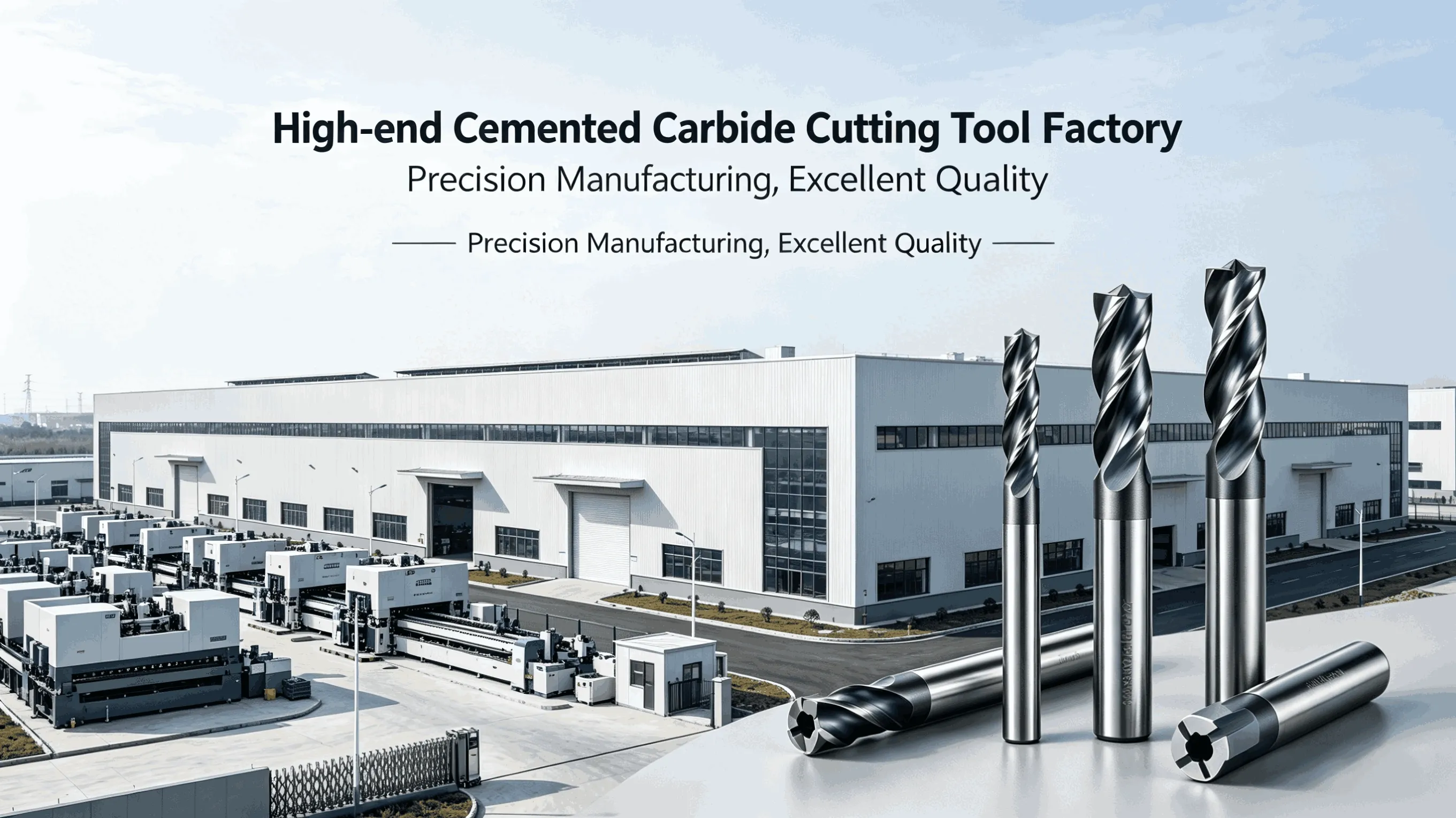
How to Source Solid Carbide End Mills From China: A Practical Buyer's Guide
China manufactures some of the world's most competitive carbide cutting tools — but quality varies enormously between factories. Here's how to find, verify and manage the right manufacturing partner without flying around the country yourself.

China has the broadest and most specialized carbide manufacturing industry in the world. Different factories have very different strengths — in powder metallurgy and grading, CNC tool grinding, edge preparation, PVD coating, precision measurement and custom production. Somewhere in that landscape, there is almost certainly a factory perfectly suited to your end mill program.
The challenge, for overseas buyers, is that finding the right factory for each product is time-consuming, and the wrong factory is expensive — not in unit price, but in scrap rates, inconsistent batches, missed shipments and reputational risk with your own customers.
This guide covers what professional buyers should evaluate when sourcing solid carbide end mills from China, and how a sourcing partner like CutStars turns this into a manageable, one-contact process.
1. Understand What You're Actually Buying
An end mill is not a commodity with a price; it's a system of material, geometry and process. Before contacting any supplier, define:
- Workpiece material and ISO group (P/M/K/N/S/H), hardness and machining condition
- Application type — roughing, finishing, slotting, profiling, adaptive/high-speed
- Reference standard — a sample, a drawing, a part number or a competitor's tool you want to match or replace
- Volumes and reordering rhythm — this determines which factories will take you seriously
- Tolerance and quality expectations — diameter tolerance, runout, coating, marking, packaging
Suppliers respond very differently to "quote me 12mm 4-flute end mills" versus a complete technical package. The second gets you matched with the right capability — the first gets you the cheapest quote in your inbox.
2. Evaluate the Factory's Real Manufacturing Capabilities
A credible end mill manufacturer should demonstrate competence across the full production chain. The key checkpoints:
Carbide rod blanks and grade control
- Grade traceability: cobalt content (typically 8–12%, with ~10% mainstream) and WC grain size (~0.8 µm mainstream; finer for hardened-steel finishing grades)
- Blank tolerance class: ground rod blanks are graded h4/h5/h6/h7. As a reference point, h5 on a Ø3–6 mm blank allows roughly ±0.0025 mm — tighter blanks produce more consistent ground tools. Ask what tolerance class they buy and whether they verify incoming blanks.
CNC tool grinding
- 5-axis CNC tool grinders (as opposed to manual or rebuilt machines) for consistent flutes, core thickness and geometry
- Ability to hold edge runout and diameter tolerances across a batch — ask for a recent batch inspection report
Edge preparation (honing)
This is one of the largest quality gaps between top-tier and average manufacturers. Every ground edge carries microscopic defects — typically 0.01–0.05 mm micro-chipping, visible under 100× magnification. Left untreated, these defects propagate during cutting and cause premature failure.
- Serious factories use mechanical (drag-finish) or blasting (shot-peen/micro-blast) honing with defined parameters
- Ask: what honing process, what edge radius targets, how is consistency checked? "We deburr by hand" is not an answer.
PVD coating
- Modern coating technology refreshes roughly every three years, and it differentiates tool generations more than substrate improvements do
- Ask which coating line they use, which coating chemistries they offer per ISO material group, and whether edge prep is performed before coating (it must be)
- Match coating to application: there is no universal coating — and some coatings demand dry cutting while others need strong coolant
Quality control and inspection
A professional pre-shipment inspection should cover:
- Material/grade verification
- Dimensional inspection (diameter, flute length, overall length, shank)
- Runout and tolerance verification
- Coating appearance and adhesion checks
- Visual and packaging inspection
3. Standard Catalog vs. OEM / Private Label: Choose Your Model
Standard catalog sourcing suits distributors building a general-purpose product line. Speed is the advantage; differentiation is limited.
OEM / private label suits tooling brands, industrial distributors with their own labels, and manufacturers with specific requirements. A capable sourcing partner should accept:
- a drawing,
- a physical sample,
- a part number,
- a competitor's product, or
- a written technical requirement —
… and translate it into manufacturable specifications, coordinate prototypes, and verify quality before production.
The typical custom workflow: drawing review → material & grade selection → supplier matching → sample/prototype → quality verification → production → global delivery.
4. The Hidden Costs of Managing Factories Yourself
Direct-from-factory sourcing looks cheaper on the quote — until you add up:
- Searching and vetting: each product category tends to have different specialist factories (end mills, drills, reamers, inserts, wear parts are rarely done best by the same factory)
- Communication overhead across time zones and technical translation
- Sampling cycles across multiple candidates
- Quality disputes with no neutral referee
- Consolidating mixed products from several factories into one shipment
A specialized factory is usually excellent at its product category. The question that matters is not "what can one factory manufacture?" but "what does the customer need?" — and then matching the right factory to each requirement. That matching is exactly the role CutStars plays: one point of contact, multiple qualified manufacturing capabilities, quality requirements coordinated and verified before shipment, export documentation handled end-to-end.
5. A Practical Checklist Before You Place a First Order
- Full technical package shared (material, application, reference tool, tolerances)
- Grade traceability confirmed in writing (Co %, grain size, rod tolerance class)
- Edge preparation and coating process documented
- Pre-shipment inspection scope agreed (dimensions, runout, coating, visual, packaging)
- Samples or prototypes evaluated in your machining condition, not just measured
- Marking, packaging and labeling requirements fixed (critical for private label)
- Reorder process and lead times agreed
- Incoterms, payment terms and export documentation confirmed
Frequently Asked Questions
Is it safe to buy carbide end mills from China? Yes — if supplier quality is verified properly. The Chinese carbide industry ranges from world-class to inconsistent. Risk comes from choosing factories by price alone. Verify grade traceability, grinding capability, edge preparation, coating source and pre-shipment inspection — or work through a sourcing partner who manages this for you.
Can I get my own brand (OEM / private label) end mills made in China? Yes. Most capable manufacturers support OEM production from drawings, samples or part numbers. A sourcing partner adds value by translating your technical requirements into manufacturing specifications, coordinating samples across candidate factories, and verifying quality before mass production.
What information do I need to request a quotation? Workpiece material and hardness, application type (roughing/finishing/slotting), tool geometry or reference sample, tolerances, coating requirements, quantity and target price. The more application detail you provide, the better the product match.
What's the typical process when working with CutStars? Understand your requirement → match suitable manufacturers → coordinate samples → verify quality per agreed specifications → produce → manage packaging and international shipment. One contact, full process visibility.
Start Your Carbide Sourcing Request
Tell us what you need — a product name, part number, drawing, sample, or simply a machining problem. CutStars will identify suitable manufacturing capabilities in China, coordinate sampling, and verify quality before shipment.
[Get a Quote] · [Send Your Drawing] · [Talk to Our Team]
CutStars — China carbide sourcing: one partner, multiple capabilities, global solutions.