
Sep 18, 2026Cutting Tool Selection Guide
PVD vs CVD Coating for Cutting Tools: Pros, Cons & How to Choose
PVD vs CVD coating for carbide cutting tools: compare pros, cons, temperature ranges, tool life and best applications. Learn which coating maximizes CNC machining efficiency and minimizes cost.
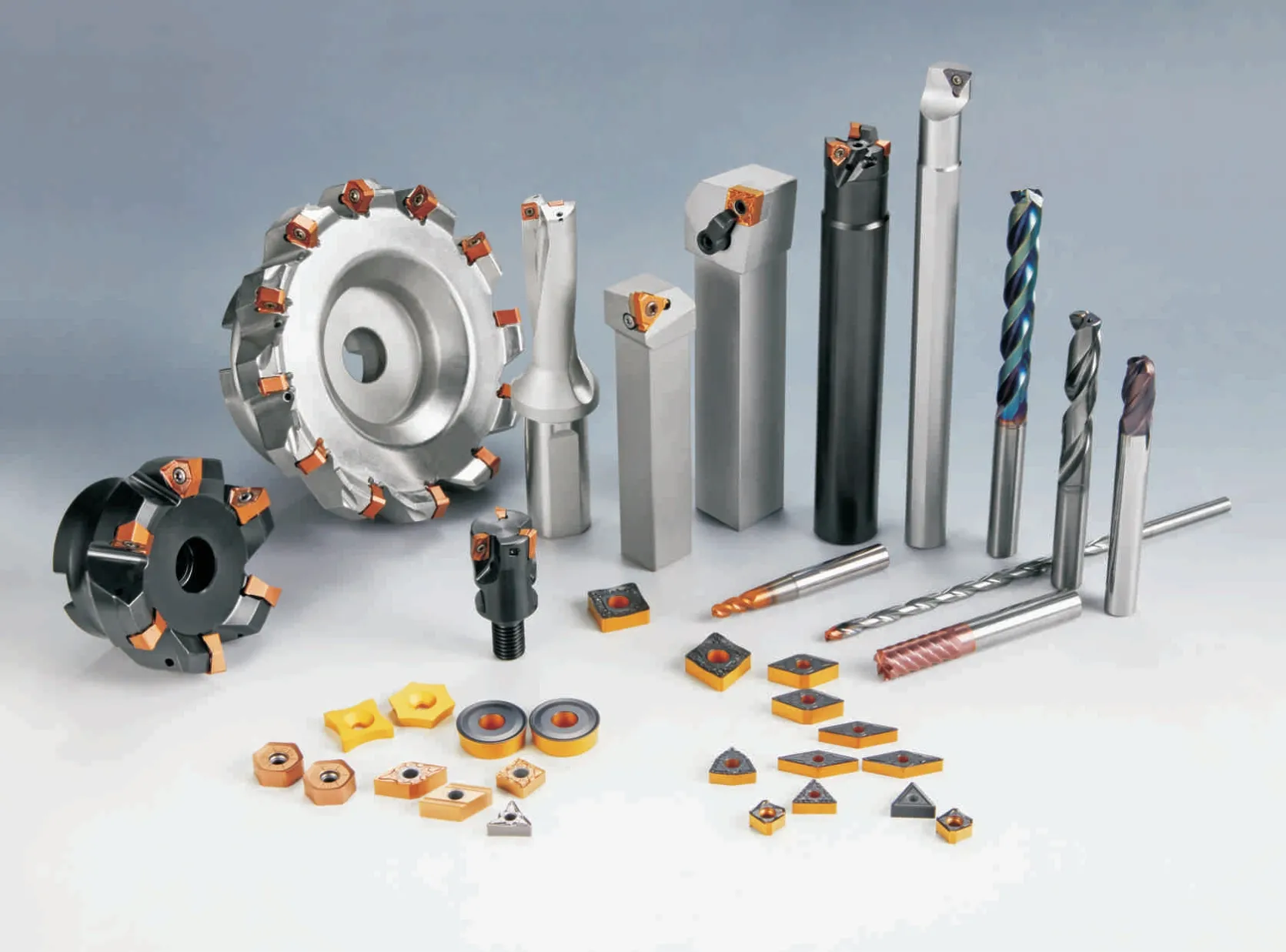
PVD vs CVD Coating for Cutting Tools: Pros, Cons & How to Choose
Stop choosing cutting tool coatings blindly. In CNC machining, PVD (Physical Vapor Deposition) and CVD (Chemical Vapor Deposition) are the two dominant coating technologies — and their performance differs dramatically. Pick the wrong one and you risk shorter tool life, premature edge chipping, and lower machining efficiency. This guide breaks down the advantages, disadvantages, and ideal applications of each so you can match the right coating to the right job.
What Is PVD Coating? (Physical Vapor Deposition)
PVD coating's core strength is edge protection and impact resistance. The PVD process runs at only 400–600°C — a low-temperature process that does not damage the hardness of the tool substrate. The coating is thin and uniform, which means it preserves the sharp, precise cutting edge of the tool almost perfectly.
PVD Coating Advantages
- Protects the cutting edge — low-temperature deposition keeps the substrate hard and the edge sharp.
- Excellent impact resistance — ideal for milling, interrupted cutting and variable loads.
- Thin, uniform layer — perfectly retains a keen cutting edge for fine finishes.
- Compressive residual stress — strong resistance to edge chipping and micro-cracking.
- Best for soft and tough materials — stainless steel, high-temperature alloys, aluminum and copper.
PVD Coating Disadvantages
- The coating is relatively thin, so high-temperature and continuous-wear resistance are only moderate.
- Not ideal for long-duration, high-speed hard-material cutting.
Bottom line: For machining stainless steel, high-temperature alloys, and soft materials such as aluminum and copper, PVD is almost always a safe choice — especially for milling, interrupted cutting and finish machining.
What Is CVD Coating? (Chemical Vapor Deposition)
CVD coating is built for high wear resistance and high temperature resistance. It requires deposition at 800–1050°C. The coating is far thicker than PVD, with extremely strong thermal stability and a built-in alumina (Al₂O₃) heat-barrier layer that lets it withstand ultra-high-speed, long continuous cutting.
CVD Coating Advantages
- Superior wear resistance — much thicker coating than PVD.
- Outstanding heat resistance — stable at 800–1050°C.
- Alumina insulating layer — protects the substrate during heavy cutting.
- Long tool life in mass production — for roughing steel and cast iron, CVD tool life crushes PVD.
CVD Coating Disadvantages
- The high-temperature process slightly dulls the cutting edge.
- The coating carries tensile stress, making it relatively brittle.
- It fears impact and interrupted cutting, and chips easily when used for milling.
PVD vs CVD Coating: Side-by-Side Comparison
Factor | PVD Coating | CVD Coating |
Process temperature | 400–600°C (low) | 800–1050°C (high) |
Coating thickness | Thin & uniform | Thick |
Residual stress | Compressive (tough) | Tensile (brittle) |
Cutting edge | Kept sharp | Slightly dulled |
Heat resistance | Moderate | Excellent |
Impact / chipping resistance | Excellent | Poor |
Best cutting mode | Milling, interrupted, finish | Continuous turning, roughing |
Typical materials | Stainless, high-temp alloys, Al/Cu | Steel, cast iron |
Main weakness | Wear life in heavy continuous cuts | Edge chipping in milling |
How to Choose: PVD or CVD?
Choose PVD when you need:
- Finish machining and tight tolerances
- Interrupted / variable cutting loads (milling)
- Complex or irregular-shaped parts
- Soft or tough materials — stainless steel, high-temperature alloys, aluminum, copper
Choose CVD when you need:
- Roughing and large-allowance material removal
- Continuous turning operations
- High-speed mass production of steel and cast iron
- Maximum tool life under sustained heavy cutting
Quick rule of thumb: For finish machining, interrupted cutting, complex parts, and soft materials, prioritize PVD. For roughing, continuous turning, and high-speed mass production of steel and cast iron, go straight to CVD. Matching the coating to the working condition is the simplest way to lower your machining cost.
Frequently Asked Questions
What is the main difference between PVD and CVD coating? PVD is applied at 400–600°C, producing a thin, uniform coating that preserves a sharp edge and resists chipping — ideal for milling and interrupted cutting. CVD is deposited at 800–1050°C, producing a thicker, highly wear- and heat-resistant coating — ideal for high-speed continuous roughing of steel and cast iron.
Which coating lasts longer, PVD or CVD? For long-duration, high-speed continuous cutting of steel and cast iron, CVD tools generally deliver longer life because of their thicker coating and alumina heat-barrier layer. For intermittent cutting, finish machining and soft materials, PVD lasts longer because it resists edge chipping and keeps a sharp cutting edge.
Why is CVD not recommended for milling? The CVD high-temperature process slightly dulls the cutting edge and leaves the coating under tensile stress, making it relatively brittle. Milling involves interrupted cutting and impact, so CVD-coated tools are prone to edge chipping. PVD is the safer choice for milling.
Can PVD coating be used for hard and high-speed cutting? PVD coatings handle many finishing and semi-finishing operations, but because the layer is thin, its heat and continuous-wear resistance are moderate. For long-duration, high-speed hard-material cutting, CVD or other specialized solutions are usually preferred.
Source the Right Coated Carbide Tools with CutStars
The coating is only one piece of the puzzle. CutStars is your China sourcing partner for carbide solutions — connecting global distributors, industrial buyers and OEM brands with qualified Chinese manufacturers of carbide cutting tools, modular milling systems, carbide wear parts and custom components.
Through our Technical Product Matching service, we evaluate material, carbide grade, geometry, coating, tolerance and application together — so you get the right tool for the right condition, not just a catalog number. We manage sampling, quality control and global export through one reliable point of contact.