
Sep 9, 2026Cutting Tool Selection Guide
Tool Material Properties and Their Impact on Cutting Tool Design
Tool Material Properties and Their Impact on Cutting Tool Design
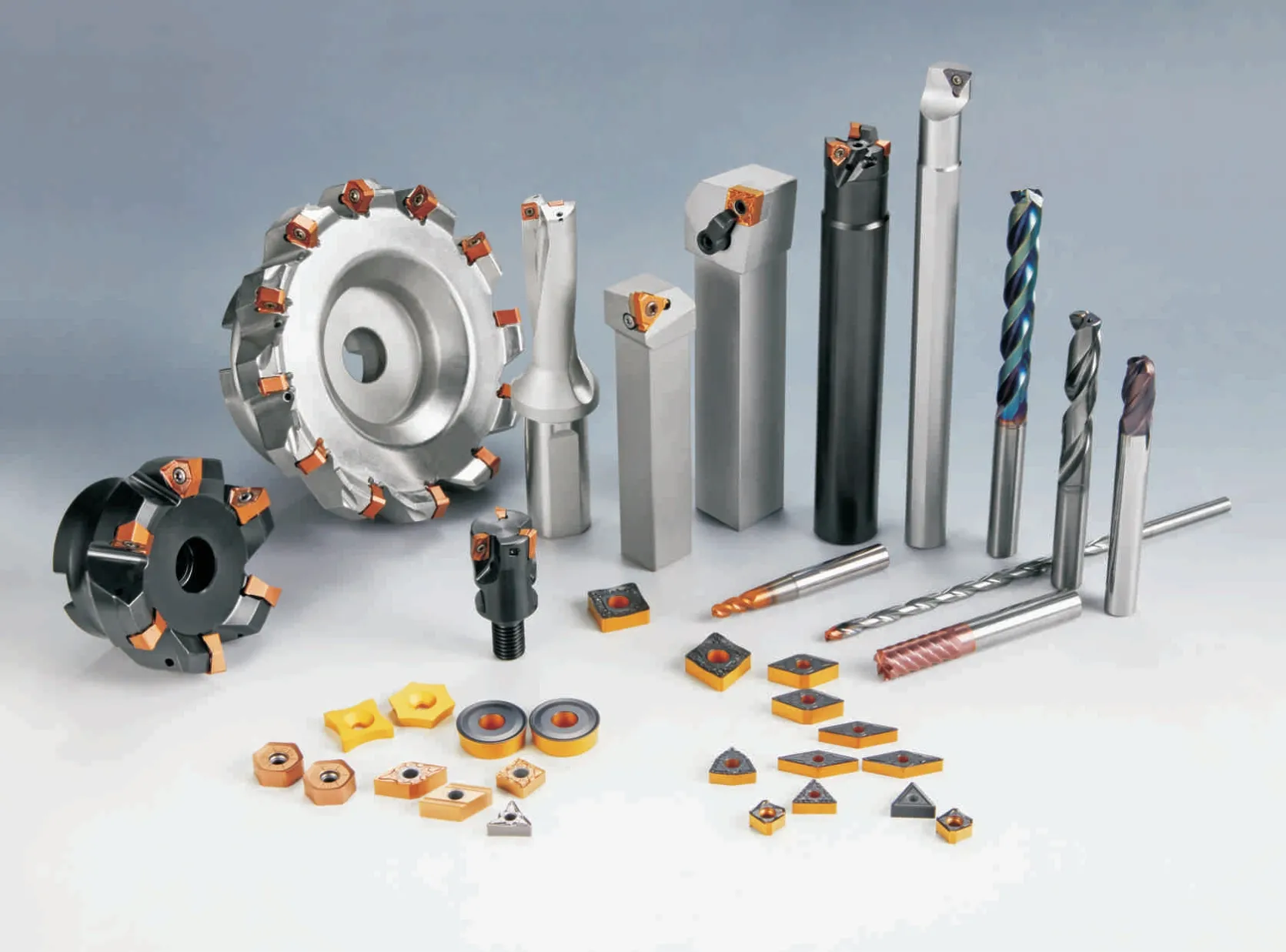
How Tool Material Properties Influence Cutting Tool Design
The engineering link between material behaviour and tool geometry — and how to use it to extend tool life.
A cutting tool is a compromise between the material it is made from and the geometry it is ground into. Hardness, toughness, Young’s modulus and thermal conductivity each place different demands on cutting forces, edge strength and heat removal — and those demands are answered by the angles you choose, the way you prepare the edge, and the coating you apply.
01Material hardness & its impact on tool performance
A tool material’s hardness is closely tied to its yield strength, tensile strength and shear strength. Together these determine the cutting force, the rate of tool wear and the achievable machining efficiency. In general, a harder material delivers better wear resistance — it holds a sharp edge for longer — but that gain is often paid for with lower toughness, making the edge more sensitive to chipping under impact or interrupted cutting.
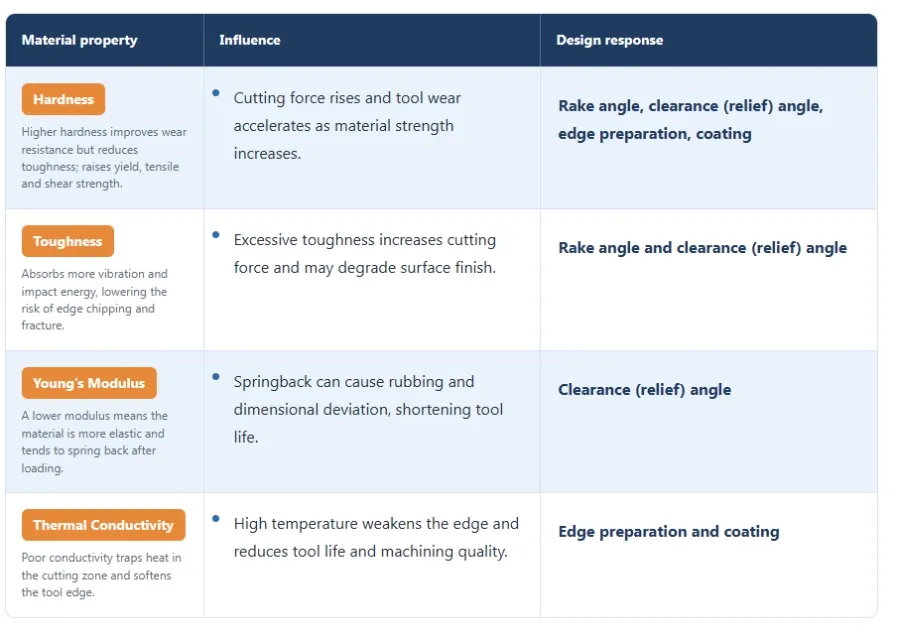
In practice, higher strength in the workpiece means greater cutting force and faster tool wear, so the response from the tool side is typically a smaller rake (cutting) angle, a carefully chosen clearance (relief) angle, appropriate edge preparation and a coating that can carry the extra load.
02Wear resistance and tool life
Wear resistance is what allows a tool to keep its geometry over time. Selecting the right tool material for the workpiece — and reinforcing it through coating and edge treatment — directly extends service life and stabilises machining efficiency. The harder the workpiece, the more important it becomes to match the tool material and coating to the application, rather than relying on a generic geometry.
03Toughness and its effect on cutting
Toughness is a material’s ability to absorb energy without fracturing. A tougher tool material handles vibration, shock and the repeated impacts of interrupted cutting better, reducing the risk of edge chipping and sudden breakage. The trade-off is that too much toughness can push cutting forces up and compromise surface finish.
On the geometry side, toughness is mainly balanced through the rake angle and clearance (relief) angle: a stronger edge supports the tougher, impact-prone condition, while the clearance angle prevents rubbing as the cut develops.
04Thermal stability and heat dissipation
Cutting generates intense local heat. A material with high thermal stability resists softening at the elevated temperatures of the cutting zone, preserving both edge geometry and machining quality. Thermal conductivity matters just as much: when conductivity is low, heat builds up in the tool edge and accelerates wear.
Tool design therefore has to support heat management. Poor conductivity points toward attention on edge preparation and coating — both of which influence friction and the tool’s ability to survive at high temperature — alongside any internal cooling or chip-evacuation considerations in the tool body.
05Property – influence – design response map
The figure below is the practical summary: each material property drives a specific effect on the cut, and each effect maps to a concrete set of geometry and surface decisions.
06Bringing material and geometry together
Tool design works best as a matched pair: choose the material for the dominant requirement (wear, toughness or heat resistance), then let geometry and coating do the balancing. A hard, wear-resistant grade may need a smaller rake angle and stronger edge prep; a tougher material can support sharper, more aggressive angles. Reading the property map above is the first step toward selecting a tool that is genuinely suited to the job — rather than one that simply fits the holder.